Showing posts with label 5 stars. Show all posts

Sunday, August 17, 2014

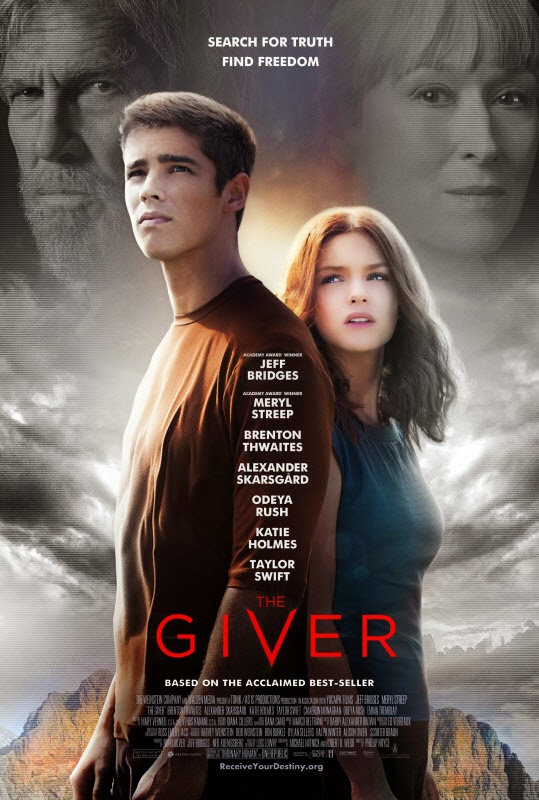
The Giver

Overall Rating: 5 out of 5 stars
MPAA Rating: PG-13 for a mature thematic image and some sci-fi action/violence
Appropriate for: Ages 13+
Genre: Sci-Fi Drama
Length: 94 minutes
Year of Release: 2014

In sixteen-year-old Jonas’ world, everything is black and white. Red, yellow, blue, and green are unheard-of qualities. No color exists. To the eyes of every person in Jonas’ community, the entire world consists of varying hues of gray. Sight is not the only thing that is colorless for these people, though. The individual lives of the people in the community are colorless as well. From the clothing they wear and the houses they live in to the feelings they experience, everything is uniform and regulated. There is no personal property. There are no personal emotions. All this is made possible by the daily injections everybody in the community takes. And, because of it, everyone is happy. At least, as happy as emotionless, colorless people who have no memories of defining life experiences can be.

This is how the Elders meant it to be. The rules against lying, imprecise language, staying out past curfew, and the rest were all instituted so that the people in the community would be able to live in harmony. By eliminating colors and any sense of individuality, the Elders were also able to eliminate emotions like love, hate, and sadness that only brought death and conflict to a world that almost ended in war. It’s now the year 2048 AD, and utopia has been achieved.

At the community’s Ceremony of Growth, Jonas (Brenton Thwaites) and his two close friends, Fiona (Odeya Rush) and Asher, receive the assignments for the jobs they will perform the rest of their lives. Asher is assigned to pilot drones, and Fiona is placed in the nurturing center, where she will help care for the babies that are produced by the assigned mothers of the community. But Jonas—his job is special. The Elders assign him to become the next Receiver of Memory. As he commences his training with the previous Receiver, now known as “The Giver” (Jeff Bridges), Jonas begins to see things that no one else but the Giver can see. He begins to feel things that only he and the Giver can feel. And he’s not so sure that the world is better off without these colors and without these feelings—even if they sometimes cause him pain. Although the words “war” and even “hate” are unheard of in his community, Jonas discovers that death itself has a home there—and no one but he recognizes it because only he knows what it means to love.

Due to some thematic elements and mature themes, this movie probably isn’t a film for young children to watch. However, there is no crude language to speak of, and the boy-girl content is limited to two or three innocent kisses. Even the violence is minimal. One character punches a boy in the face, and a group of security guards chase down the character, ending in a motorcycle chase. The character is also tracked down by a drone and is almost killed when the drone drops him from high in the air. During Jonas’ training, the Giver and Jonas enter the memory of a war. In that memory, Jonas sees people being shot to death. He also enters a memory of an elephant hunt. The memory ends as Jonas sees the hunters shooting the animal. Even in Jonas’ community, death has its presence. Also during his training, Jonas learns that unhealthy babies and elderly people are killed by injections. He begins to recognize that, although his community does not suffer from the violence he saw in that memory of war, the people of the community have made death at home by killing those who are considered “unfit to live” by the community’s standards. Although parts of the movie can get a little intense, The Giver presents and deals with its tough themes really well. The content is best suited to teens and adults, but even mature pre-teens could likely handle the content with some guidance from adults.  

Of all the movies I’ve seen and reviewed this summer, this movie is one of the best. I put it right up there with The Book Thief. It’s not action-packed, the acting isn’t incredible, and the story isn’t thrilling, but this is a solid movie—it’s a beautiful movie. The Giver is based on Lois Lowry’s book of the same name and examines the future of society if this world continues to move in the direction it is currently heading. I have heard from various sources that the movie does not stay quite true to the original story and would, therefore, be disappointing to fans of the book. However, as a movie, The Giver succeeds in communicating a poignant message that the postmodern world needs to hear. It examines the facets of human nature and deftly explores crucial themes such as the sanctity of human life, the centrality of choice, and the purpose of existence.

The Giver addresses the age-old question that the human race has been asking since the Garden of Eden: Why give humans the freedom of choice if they will tend to choose evil every time? This movie reminds us that life is not true life without choice. Without choice and the driving force of emotions, there can be no hate—but there can also be no love. In John 14:21, Jesus said, “Whoever has my commands and keeps them is the one who loves me. The one who loves me will be loved by my Father, and I too will love them and show myself to them.” In other words, those who love God will choose to obey him. If God had not given humans the choice to obey him in the Garden of Eden, humans would not have had the ability to love him or to love at all. Without love, what is life? In The Giver, Jonas discovers that the lives of the people in his community are so empty without colors, without emotions… without love. They may be free from violence, hate, and war, but, at the same time, they are missing the things that make life real. There could be so much more to their lives if only they could have the ability to choose love over hate and life over death instead of living lives of nearly mindless actions and shallow feelings.

The Giver is a must-see. The message alone and the questions it raises are worth your money, and the tender beauty and innocence of this film is worth watching over and over again.

Friday, May 23, 2014

Rose in Bloom

Overall Rating: 5 out of 5 stars
Appropriate for: Ages 10+
Genre: Classic Romance Novel
Length: 344 pages
Year of Publication: 1876

In this beautiful and satisfyingly romantic sequel to Eight Cousins, Louisa May Alcott follows the sweet, young, nineteenth-century heiress, Rose Campbell, through the experiences that bring her from girlhood into womanhood. In the opening chapter, Rose returns to America with her uncle and friend, Phebe, from two years abroad. These two years have brought changes in the two young women as well as in the seven cousins back home on the “Aunt-Hill.” As Rose becomes reacquainted with her seven cousins—now nearly all young men—she discovers that some have changed for good and others for ill. She also discovers that several of her aunts have been speculating about her marriage to one or the other of her handsome cousins in order to keep her fortune in the family. When one of the young men actually falls in love with her, Rose must learn how to handle the love of a young man and how to read the feelings of her own heart. She also learns to discern what makes a man a true gentleman. This new element of romance brings new struggles and joys to the life of twenty-year-old Rose. However, through these struggles and the other new experiences of this young, ambitious woman, the bud that was once the little girl from Eight Cousins begins to bloom, becoming a woman of true virtue.

As Rose in Bloom is one of my favorite books, I struggle to find a true cause for criticism in the abundance of beauty that this book offers. However, one objection that I wrestled with when I read this novel for the first time several years ago was the prospect of Rose marrying one of her cousins. This being generally unheard of in my day and age, I was initially rather scandalized at the thought. One must not ignore historical context, however. In the nineteenth century, the marriage of cousins was not yet unacceptable. Please, before you read this book, drill this fact into your brain. Otherwise, the entire story will be ruined for you.

In addition, it must be noted that the subject matter of this book is slightly heavier than its predecessor, Eight Cousins. Most of the young characters are now in their twenties and, therefore, face the trials and temptations of young adults. One of the young men in particular struggles with alcohol addiction, bringing an element to this book that is more serious than any seen in Eight Cousins. This cousin is also described smoking. However, Alcott gives her heroine, Rose, an admirable distaste for this young man’s way of life and examines the true ugliness of such a life without discipline. This novel also sees the tragic death of a character—another element that makes this novel less of a children’s book and more appropriate for young adults.

From a Christian perspective, another objection to this novel is the absence of Jesus Christ from the lives of the characters and other small ways in which Alcott’s transcendentalist worldview shows through. Although Rose and her relatives often refer to “God” and “being good,” they seem to have no strong foundation for their desires to “be good” other than to please and help each other. The characters also speak and act as if they can make themselves good. To the Christian, however, humans are sinners and need Jesus Christ in order to be truly good. Good works cannot save anyone; they are only the fruit of a life changed by Christ. As long as the reader understands this, however, Alcott’s discussion of “being good” is not harmful. Instead, she explores the lives of her characters in a way that expands the reader’s understanding of what a truly beautiful and virtuous life looks like—an image that would be nearly spot-on if Christ had not been left out of the picture. (For more discussion on the concept of goodness, see my 2010 blog post “Be Good.”)

Despite these few objections, I strongly recommend this novel to any ambitious young reader looking for a good classic romance. Obviously, this genre of novel would generally lend itself to young ladies rather than to the boys, but I would caution parents against giving this book to a lady who is not old or mature enough for romance—even though this romance is very innocent and lighthearted. Miss Alcott handles Rose’s romance tastefully and offers wholesome advice to her readers through the medium of this little book; however, I would still not recommend the Eight Cousins sequel to children under the age of ten due to the more mature elements and subject matter mentioned above.

In closing, I think I can easily say that Rose in Bloom is one of the most refreshing and heartwarming romances that I have read in a long time. Written in Alcott’s intelligent, humorous, and engaging style, this book presents a beautiful image of true womanhood, true manhood, and true love. In addition, I have found that this is a novel worth reading over and over again because, although it is as sweet as sugar, it is wholesome at the core and good for the soul.

Wednesday, May 21, 2014

Eight Cousins

Overall Rating: 5 out of 5 stars
Appropriate for: All ages
Genre: Children’s Novel
Length: 292 pages
Year of Publication: 1875

Set in nineteenth-century Boston, Louisa May Alcott’s Eight Cousins—originally published serially—follows a year in the life of young Rose Campbell. Rose, a sweet and delicate thirteen-year-old, is an orphan. She never knew her late mother, and her father recently passed away, so she is now subject to the care of her aunts and uncles and the attention of her seven boy cousins. There is a problem, though: Rose is dreadfully afraid of boys. How will she ever manage among a throng of young, energetic lads? The efforts of her great aunts to restore her to health and happiness being fruitless, her legal guardian, Uncle Alec, takes over Rose’s “bringing up” upon his return from overseas. Uncle Alec, a bachelor and a seafaring doctor with innovative views on raising children, makes a deal with the aunts: they must give him a year to try his best to bring Rose back to health and happiness, and, if his methods prove ineffective, he must hand her over to someone else’s care at the end of the year. As Rose soon discovers, Uncle Alec’s methods may actually be more practical than anyone ever imagined—and boys may not be as bad as she thought. Through numerous adventures with her uncle and seven rambunctious cousins, Rose learns what true happiness is and begins to recognize what it means to be truly rich—rich not in money and possessions but in virtue and love.

I wish they still published books like this. Sure, it may feel a bit moralizing at times, and the plot may not be exactly riveting, but this book has some beautiful elements that make it worth more than all contemporary children’s books put together. One objection I do have to this book is the absence of Jesus Christ in the lives of the characters. While Rose and other characters often talk about “being good,” they speak as if they have the ability to “be good” on their own—as if they can purify themselves. In the Christian worldview, however, humans are subject to the sinful nature. Without Christ, no one can be delivered from that nature. (For more discussion on the concept of goodness, see my 2010 blog post “Be Good.”)

Despite the absence of this foundational concept, I still find it refreshing to read a book that champions morals, virtue, the beauty of family, and true friendship. The children in this book actually respect their elders, and Alcott clearly praises the adults who are active in the lives of the eight cousins. This book shows that, even in an imperfect world with imperfect people, families can still thrive.

Eight Cousins easily falls in the category of wholesome children’s literature. Although I would rank this book somewhere below The Chronicles of Narnia, it’s right up there with works like the Little House series, Little Women, The Secret Garden, and the Caddie Woodlawn books. In comparison to many modern works of fiction for children, this book has a lot of meat in it. It’s not just air and sugar like some contemporary works. It has substance. Although the reading level of this novel may be somewhat advanced for younger children, I highly recommend Eight Cousins to readers of all ages. Parents, read it aloud to your young kids. Teens, why not give it a shot? It may not be a thrilling story, but it is beautiful. It will make you smile—and maybe even laugh out loud. If you give it the time of day, you’ll find yourself caught up in the lives of some lively and lovely characters and falling in love with Alcott’s witty and engaging voice.

Tuesday, August 7, 2012

Chronicles of Avonlea

Overall Rating: 5 out of 5 stars
Appropriate for: Ages 10+
Genre: Canadian Literature
Length: 192 pages
Year of Publication: 1912

Chronicles of Avonlea is a collection of short stories by Lucy Maud Montgomery set in the beloved town of Avonlea and the towns surrounding it. Avonlea is the home of Anne Shirley, and, although Anne only plays a small part in these stories, the Anne-ish tendency toward scrapes is still dominant in many of the characters. As you will discover in this book, Anne is not the only human being in Avonlea with an exciting life. Written in the ever-brilliant and engaging voice of Montgomery, these stories cover everything from marriages to elopements, from auctioned babies to dying wishes. Some of the stories are toned with a sweet sadness, while others are hilariously and ridiculously funny. Yet, despite the various tones of these twelve short stories, all of them have satisfying endings and are filled with innumerable life lessons. 

My favorite stories from Chronicles of Avonlea were “Old Lady Lloyd,” “The Winning of Lucinda,” “Quarantine at Alexander Abraham’s,” and “The Courting of Prissy Strong.” In “Old Lady Lloyd,” Miss Lloyd discovers that the daughter of her former beau is residing in her neighbor’s house for the summer. Out of a desire to help the young lady, the old woman sends secret gifts and performs random acts of kindness for her unsuspecting beneficiary. “The Winning of Lucinda” recounts the resolution of a dispute between Lucinda and her former beau, Romney. The resolution is slow in coming, however, because Lucinda has sworn never to speak to Romney again. Lucinda’s tongue is finally loosened by a fall into a creek. In “Quarantine at Alexander Abraham’s,” Angelina Peter MacPherson, a firm man-and-dog-hater, is quarantined at the smallpox-infected house of Alexander Abraham Bennet, a dog-loving misogynist, as a result of accidentally entering his house while calling on church business. The outcome is all but disastrous. “The Courting of Prissy Strong” tells the tale of timid Prissy Strong, her possessive sister, Emmeline, and Prissy’s anxious beau, Stephen Clark. Although forbidden by Emmeline from ever approaching Prissy again, Stephen Clark is anxious to find a way for him and Prissy to marry without the knowledge of the fierce Emmeline. In the end, Anne Shirley, a closet window, and a step ladder save the day. 

As a collection of short stories, each chapter of Chronicles of Avonlea has different characters, a different plot, and a slightly different setting from all of the others. Therefore, the book can be somewhat boring if you are in search of an epic novel. But, if you are aware that Chronicles of Avonlea is a collection of short stories when you begin, you will not be disappointed with what you find. This book has very little objectionable content. However, there are a couple misuses of the Lord’s name, many of the stories deal with romance, there is a reference to drinking, and some of the antagonists are openly anti-Christian. Good always prevails in these stories, though, and Montgomery keeps the romance very clean. In the stories that deal with religious topics, Montgomery communicates and supports the biblical worldview accurately and thoroughly. A minister even shares the Gospel message with another character in one of the stories. Another item to be aware of is that some of the women characters in Chronicles of Avonlea have a very low view of men in general. At the end of the stories, however, many of these women learn that they cannot go on without the men and, frequently, end marrying one. 

Montgomery’s work contains many valuable lessons about various topics – including self-sacrifice, true love, God-given talents, and resolving disputes. In addition, Chronicles of Avonlea is entertaining, humorous, and an easy read. Because the large number of stories involving romance, however, I suggest that only children ten and up should read this by themselves. Nevertheless, I would highly recommend this book to families with young or old children looking for a good read-aloud. Montgomery is sure to satisfy the desires of every “kindred spirit” with these twelve excellent short stories.

Tangled

Overall Rating: 5 out of 5 stars
MPAA Rating: PG for brief mild violence
Appropriate for: All Ages
Genre: Animated Fairytale Musical
Length: 92 min
Year of Release: 2010

(Family discussion questions for this movie can be found at http://christianperspectivereviews.blogspot.com/p/blog-page_3851.html)

Tangled is a lighthearted and adventurous Disney adaptation of the classic German fairy-tale about the long-haired blonde, Rapunzel. The story begins when the pregnant queen of a happy, thriving kingdom is healed from a deadly sickness with a magic flower. Soon, a healthy, blonde baby girl is born to the king and queen, and they celebrate her birth by releasing a floating lantern into the sky. However, the golden hair of baby Rapunzel appears to have acquired the magic qualities of the golden flower that saved her mother. Hoping to use the princess’ magic hair to keep herself young forever, an old, selfish woman named Gothel kidnaps the baby princess and locks her in a lonely tower, far from the kingdom. The king and his men search far and wide for the beloved princess, but their search is futile. Clinging to hope, however, the king and queen release hundreds of floating lanterns into the night sky every year on the Rapunzel’s birthday in hopes that she will one day return. Rapunzel (the voice of Mandy Moore), forbidden by her “mother” Gothel from leaving the tower, sees the lanterns through the windows of the tower every year, and every year her desire to see them up close increases, even though she does not know their meaning. On her eighteenth birthday, Rapunzel gathers up the courage to ask Gothel if she can go to see the floating lanterns. Gothel refuses, explaining that Rapunzel is not ready to face the challenges and evil people in the world outside of the tower. But when an unsuspecting thief, running from the palace soldiers, tumbles through the window of the tower, Rapunzel has her chance to live her dream and prove to Gothel that she is strong enough to handle the world. 

The first and most prominent objection to the movie is that the whole movie rotates around a girl’s disobedience to the authority in her life. Along with this element of disobedience comes a discussion of rebellion between Rapunzel and the thief, Flynn Ryder. Right after disregarding Gothel’s orders by leaving the tower, Rapunzel experiences a see-saw of emotions concerning her choice. One moment, she is overflowing with joy because she is finally free, and the next moment, she is despondent and tells herself she is a “despicable human being” for disobeying her “mother.” Noticing the battle Rapunzel is carrying on with herself, Flynn, who Rapunzel bribed into chaperoning her to see the floating lanterns, decides to give her some advice about growing up. He basically tells her that it is healthy for every teenager to rebel against his or her parents at some point. Although this is exactly opposite from the Christian view of rebellion, viewers must note two things before totally bagging this movie. First, Gothel is not really Rapunzel’s Mother. The rules she gives to Rapunzel are not given out of love for Rapunzel, but out of a selfish desire to keep anyone from taking her source of youth and beauty. Second, Flynn gives this advice to Rapunzel in an attempt to make her feel guilty so that she will return to her tower and let him out of their bargain. However, this objection is still very present and very prominent in the movie, especially since Flynn never takes back what he said about rebellion. As a result, I would not watch this movie without discussing the biblical view of a child’s relationship with his or her parents with the younger members of the audience.

With the major objection aside, there are only a few more things to be aware of regarding this movie. The movie involves some violence, including sword fights, fist fights, people being hit on the head with frying pans, and one stabbing. However, this is an animated movie, and there is virtually no blood and certainly no gore involved in the fights. There are also a few suspenseful parts of the movie that may be scary for young children, but the individual scenes of suspense are no worse than what you would find in The Lion King, for example. Additionally, Gothel and some of the ruffians and thugs are rather scary at times, and an underlying thread of magic is deftly woven into the fabric of the movie. However, the magic is only to be expected in a fairytale, we soon discover that the ruffians and thugs are not people to fear, and the evil Gothel is ultimately given what she deserves. 

While keeping in mind the previous objections, there are still many beautiful and valuable elements to this movie. The soundtrack and music are lovely, the animation is impressive, the ending is satisfying, and, overall, the movie is as fun and lighthearted as you could hope for. More significant, however, are the lessons that the movie offers to its viewers. The movie has some wonderful elements that enforce self-sacrifice and friendship and other elements that could potentially spark valuable discussions regarding growing up and obeying parents. Tangled also reminds Christian viewers that God’s plans for us are often even bigger and even better than our greatest dreams. Finally, to you audiences who enjoy government and politics, the main plot of Tangled can be analyzed as a poignant political allegory that has some interesting things to say about governments with too much power.

Overall, I found this movie to be very appropriate for a PG audience, unlike many PG movies, and would readily recommend it to viewers of all ages (allowing for the discretion of parents, of course). Not only is this movie fun and lighthearted, but it is also a great discussion starter for some very important topics. Tangled is a family movie worth seeing.

(For more of my thoughts on this movie see my blog posts Tangled, and A Government Like Mother Gothel.)

Thursday, August 2, 2012

Rilla of Ingleside

Overall Rating: 5 out of 5 stars
Appropriate for: Ages 13+
Genre: Canadian Novel
Length: 277 pages
Year of Publication: 1921

The year is 1914 and Anne Shirley is Anne of Green Gables no longer. Anne is now married to her childhood chum, Gilbert Blythe, and now lives in Glen St. Mary, sixty miles away from her childhood home in Avonlea. In fact, Anne has been a Blythe for over two decades, and Gilbert and Anne now have six children. These children are children no longer, but are all virtually adults – that is, except for fourteen-year-old Bertha Marilla, the youngest Blythe, who is the unlikely heroine of Lucy Maud Montgomery’s final installment of the Anne of Green Gables series. Bertha Marilla, called Rilla by her friends – and enemies – is but a child, despite her desire to dress like a lady and go to parties. Rilla, unlike the rest of the Blythe children, does not wish to go to college and possesses no aspirations concerning a career. She would rather live her life as a “lily of the field.” Thus far, she is off to a good start, for, while adored by her family and friends, Rilla is slightly vain, a little dramatic, somewhat selfish, a bit lazy, and unmistakably beautiful. However, when foreign conflicts drag Canada into World War One, Rilla’s life takes an unexpected turn. She is forced to discard her own vain, selfish drama as she watches her brothers and childhood playmates go off to join the uncertain fate of the Allied army in Europe. Longing to aid the cause of her country even though she is unable to join her brothers and friends in the war, Rilla fights her own battles at home at Ingleside and takes up tasks that she once despised. She organizes the Junior Red Cross in Glen St. Mary, “adopts” an orphaned baby, learns to bake, and even takes up knitting and sewing for the cause of those most affected by the war. Through her escapades, trials, and heartbreak during the painful years of the war, Rilla matures into a true woman. And, as she discovers, being a true woman is much more than attending parties and wearing long dresses. 

Rilla of Ingleside, the eighth and final book of the Anne of Green Gables series, does not have many prominent faults, but there are a few to mention. Probably the biggest fault of Rilla of Ingleside is the very problem that haunts all of Montgomery’s Anne novels: A lack of plot and intrigue. If you’re used to fast-paced thriller novels, this might be a tough read for you. Each chapter has its own sub-plot and only a few, but very prominent, plots or themes are threaded throughout the entire book. As a result, the read can become monotonous at some points, but I love it because it is so Montgomeryish – it is adds to L. M. Montgomery’s signature voice that includes so many styles of writing, including wit, humor, solemnity, and romance. 

In addition to the slow-moving plot, Rilla of Ingleside contains several statements that reflect non-Biblical worldviews. I have a difficult time discerning exactly what these worldviews are and whether Montgomery includes these statements to create diversity in her characters or if some of the statements are true reflections of her worldview. However, the pantheistic statements, for example, that elevate nature to the status of a god, are often just a part of Montgomery’s regular use of figures of speech such as personification and pathetic fallacy. Other examples can also be explained away, but they can still make the Christian reader a little uncomfortable. The novel also includes a couple cases where a character uses the Lord’s name in vain. However, foul language is not used with extreme flippancy as it is in some contemporary movies and is openly discouraged in the book by some of the characters. The final fault of the novel is the discussion of events in the war. Although Montgomery does not include any overly graphic descriptions of the horrors of WWI, the dreadful acts done during the war are frequently mentioned and may be disturbing to younger children. As a result, I believe this novel is most appropriate for teens and adults. These faults, however, are not sufficient to keep any teenager or adult from reading this beautiful, hilarious, heartbreaking work. 

Although Montgomery’s novel is not perfect, the positive aspects of her work certainly outweigh the objections. First, unlike her mother – the angelic, imaginative Anne of Green Gables – Rilla of Ingleside is a very human girl with very human faults. In fact, many of her quirks often remind me of my own oddities. As a result, Rilla is very easy to relate to, and her maturation throughout the book is a great encouragement to all of her very human audiences. Second, as someone who does not know much about the early 20th century, I have found Rilla of Ingleside to be somewhat educational. Not only does Montgomery mention major events of WWI, but she also reveals to 21st century readers what it was like to be a family working and waiting at home as brothers, sons, and friends fought in the “War to end all wars.” Overall, Montgomery’s book is brilliant. In addition to her consistently witty, humorous, and romantic style of writing, Montgomery implements a touch of sadness and hardship not fully explored in her other Anne books. In this way, she gives an entirely new depth to her Anne of Green Gables series and her beloved characters. I highly suggest that you add Rilla of Ingleside to your reading list!

Friday, July 29, 2011

The Secret Garden


Overall Rating: 5 out of 5 stars
Appropriate for: All ages
Genre: Children’s Novel
Length: 234 pages
Year of Publication: 1911

The Secret Garden is a classic children’s novel by Francis Hodgson Burnett, published in 1911. The heroine of the story is 10-year-old Mary Lennox – a sickly, spoiled, selfish, rude, dissatisfied brat who lives in India with her British parents among numerous servants. She hardly ever sees her mother and father because they never wanted a little girl. When she was first born, Mary was almost immediately handed over to the care of servants, who have always done everything she ever told them to do. Therefore, Mary has grown up without discipline or adult authority and is now all of the qualities described above. Obviously, this heroine is lacking every feature a heroine should have. But when her parents and many of their servants die from an outbreak of cholera and Mary is sent to live with an uncle she has never even met, our heroine is almost bound to change. 

The house of Mary’s uncle, Archibald Craven, is far away in England, surrounded by a vast and dismal moor. At first, Mary dislikes gloomy Misselthwaite Manor and continues to be her ordinary, miserable self. But when a maid named Martha tells her about a hidden garden that has been locked up for a decade, Mary begins to think of something other than herself. The mystery of this locked-up garden piques her curiosity, so she decides to find the garden herself. Her exploits out-of-doors improve both her health and her heart as she gets more fresh air and exercise, meets and makes friends with both humans and animals, and learns to think less of herself and more of others. But the locked-up garden is not the only secret this mysterious Manor holds. The unexplained wailings Mary hears coming from somewhere deep inside the house entice her to search for the source of the dismal sound. Her discoveries about both the garden and the strange wailings lead to the unearthing of secrets about the hidden past of this mysterious manor and her even stranger uncle, causing the lives of several people to be changed forever.

The Secret Garden is a wonderful children’s story that touches on the importance of friendship, gentleness, compassion, and physical health. However, there are a couple references to a certain “magic” that the children in the story really seem to have faith in. This also goes along with the general feel that it is “Mother Nature” or some sort of a Star Wars-type “force,” not God, who renews the health and happiness of the sickly and dissatisfied Mary and other such characters. This problem it is not extreme, and the magic discussed is not dark magic, but it can still become a very good starter for a discussion of worldviews. 

Besides this slight worldview flaw and at least one insignificant reference to drinking, this book is the perfect novel for readers of all ages. The Secret Garden is filled with many great life-lessons and is a heartwarming story that is perfect for children to read as an alternative to other, less enriching books that are overflowing bookshelves these days. I hope that some day you will take the time to visit the Secret Garden for yourself.