Showing posts with label Movie Review. Show all posts

Friday, December 19, 2014

Night at the Museum: Secret of the Tomb

(This review can also be found at http://www.christiananswers.net/spotlight/movies/2014/nightatthemuseum2014.html.)

Overall Rating: 4.5 out of 5 stars
MPAA Rating: PG for mild action, some rude humor and brief language.
Appropriate for: Ages 7+
Genre: Family Fantasy Action Adventure Comedy
Length: 97 minutes
Year of Release: 2014

All seems well at the Museum of Natural History in New York. The place buzzes with excitement as Larry Daley (Ben Stiller), the museum’s night guard, preps for the grand opening of the planetarium exposition at the museum. Thanks to the help of his friends—the wax figurines of Teddy Roosevelt (Robin Williams), Sacagawea, and others that come to life at night because of the magical tablet of Ahkmenrah—it looks like the evening is going to be a success. That is, until every exhibit in the museum starts going nuts. The life-like constellations from the new planetarium start attacking the visiting VIPs, Teddy Roosevelt aims his gun at someone’s head, and all of the animals wreak havoc among the banquet tables as the frightened visitors run from the building. A night with so much promise ends in disaster. When it’s all over, Teddy and the other exhibits have no memory of what they did.

As Larry soon discovers, the magical malfunction is linked to the corrosion that has been slowly spreading over Ahkmenrah’s golden tablet. If Larry and his friends don’t figure out how to stop the corrosion, pretty soon the entire tablet will be useless, and its magic will end. No more magic, no more living exhibits. Without the magic, Teddy, Sacagawea, Octavius, Jed and the others will be silent and still forever. Not even Ahkmenrah himself, however, knows the cause of the corrosion or how to repair the tablet. He does know one person who would have the answers they are looking for, though: his father, the pharaoh Merenkahre. But he just happens to be on display at the British Museum in London. Undaunted by the distance and determined to save their friends, Larry and his son Nick (Skylar Gisondo) take the tablet to England, bringing the whole team with them, and set out to learn the secret of the tomb.

Despite its simplistic and somewhat cliché plot, Night at the Museum 3 is an exciting flick for the whole family, filled with laughs, imagination, and kid-friendly adventures. While its biggest attraction is the clean comedy, this film also touches on the important themes of friendship, fatherhood, and loyalty. I especially appreciated the movie’s depiction of the relationship between Larry and his son, Nick. Unlike most on-screen parent-child relationships, Larry and Nick are shown communicating in a mature and level-headed manner. Their conversations do not involve yelling, slamming doors, and raised tempers but instead display an unprecedented level of clear communication and mutual respect. In general, Larry seemed to follow the command of Ephesians 6:4, which says, “Fathers, do not exasperate your children.” He does this by treating his son as an adult and as an individual rather than belittling him and his desires. Throughout the film, he also learns to value the time he gets to spend with his son and to recognize what a blessing Nick is in his life. In addition, Nick generally showed honor to his father, conforming to God’s command in verses one through three.

Near the beginning of the movie, however, Nick disrespects his father by throwing a dance party in their apartment while Larry is gone. Like any teen party, the scene has its share of loud music and red Solo cups, but the camera shows no underdressed girls, no couples making out, and no inappropriate dancing, keeping the film PG. A few other PG moments involving dancing include a scene in which Dick VanDyke’s character busts some moves in the nursing home with a group of old ladies and a closing scene in which all the characters break out their best moves. In this scene, one couple is shown slow dancing. While discussing VanDyke’s character with Larry, an elderly employee at the museum says that “Cecil Fredericks was the sexiest night guard we’ve ever had—present company excluded.”

In some of the other more risqué moments of the film, a Neanderthal and another character kiss, Ahkmenrah’s mother wears a low-cut dress, a few statues of scantily-clad ancients make an appearance, and Larry affectionately kisses the capuchin monkey. Although surprisingly minimal, toilet humor also makes an appearance. A character is nearly hit in the crotch several times, Dexter the monkey is shown peeing on two occasions, and a new character mentions that her boyfriend thinks her hair-do looks like “golden pooh sitting on [her] shoulder.”

Compared to the previous two films, this third installment of the Night at the Museum franchise has much less destruction and violence, although kids looking for a bit of action will not be disappointed. We witness an armored knight dueling the live skeleton of a triceratops and, later, three characters battling a “mythical snake demon” that has come to life. Although the destruction is not nearly as debilitating as in Night at the Museum 2, this movie has its share of out-of-control museum exhibits and broken glass. Defibrillators make appearances throughout the film, and a couple characters (both good and bad) are shown being electrocuted, although the good character doesn’t seem to suffer much damage from the event. In addition, the miniature characters, Octavius and Jed, find themselves in a number of perilous situations, one of which involves lava and a miniature volcano.

The film also includes some scenes that, although they do not fit the category of “violent,” certainly should be classified as “slightly disturbing.” In one scene, a paranoid man aggressively grabs a young boy, prophesying that “the end will come.” Later, a character eats packing peanuts and, in a different scene, another character promises that “someday, we will drink dragon’s blood together.” A boy is held captive with a knife blade at his throat, and an Egyptian promises to bury another character with honors, assuring the character that he will have all his organs removed and put in separate containers. In addition, a wax character’s nose begins to melt, creating a comical (and somewhat gruesome) effect, while another character’s face begins to deteriorate as a result of the tablet’s gradual loss of power, resulting in a deathly and frightening sight.

Although I did not catch any misuses of the Lord’s name, “d***” is used once and “h***” is used three times. One character exclaims, “where the devil,” and several characters use the words “heck,” “dang,” and “gosh.” While the Christian God is never explicitly mentioned, several characters discuss “gods” in one scene. When Merenkahre asserts that he is descended from Rah and that the Egyptian gods are the only true gods, Larry tells him that he tries to be open-minded, mentioning his own Jewish heritage while also affirming that Attila the Hun and Sacagawea both worship different gods as well. The whole concept of the magical Egyptian tablet also brings up some spiritual topics. Although they are not all in accordance with biblical Christianity, these references to religion and spirituality can serve as perfect discussion starters for families viewing this film.

Overall, I enjoyed Night at the Museum 3. The humor was generally very tasteful, and I found the depictions of friend and family relationships to be very refreshing. For some families, it may not be worth seeing in theaters, but I definitely recommend renting it. You’ll enjoy this final trip to the museum where history comes to life—literally.  

Sunday, August 17, 2014

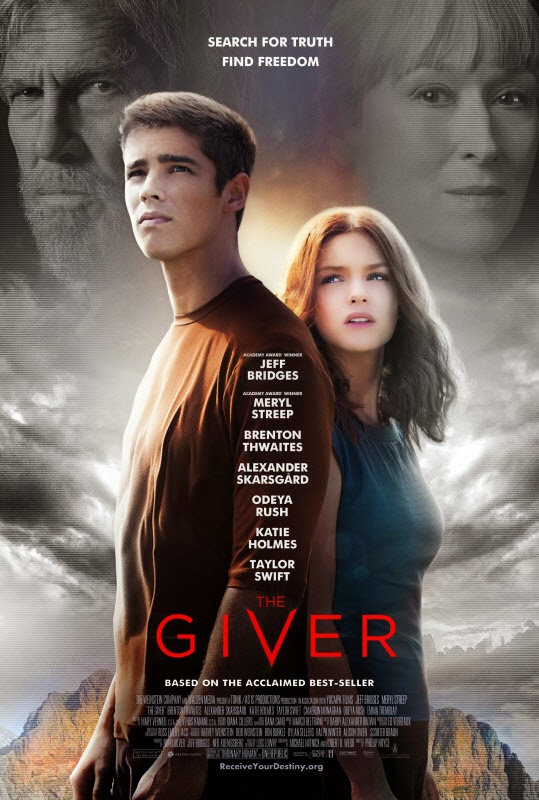
The Giver

Overall Rating: 5 out of 5 stars
MPAA Rating: PG-13 for a mature thematic image and some sci-fi action/violence
Appropriate for: Ages 13+
Genre: Sci-Fi Drama
Length: 94 minutes
Year of Release: 2014

In sixteen-year-old Jonas’ world, everything is black and white. Red, yellow, blue, and green are unheard-of qualities. No color exists. To the eyes of every person in Jonas’ community, the entire world consists of varying hues of gray. Sight is not the only thing that is colorless for these people, though. The individual lives of the people in the community are colorless as well. From the clothing they wear and the houses they live in to the feelings they experience, everything is uniform and regulated. There is no personal property. There are no personal emotions. All this is made possible by the daily injections everybody in the community takes. And, because of it, everyone is happy. At least, as happy as emotionless, colorless people who have no memories of defining life experiences can be.

This is how the Elders meant it to be. The rules against lying, imprecise language, staying out past curfew, and the rest were all instituted so that the people in the community would be able to live in harmony. By eliminating colors and any sense of individuality, the Elders were also able to eliminate emotions like love, hate, and sadness that only brought death and conflict to a world that almost ended in war. It’s now the year 2048 AD, and utopia has been achieved.

At the community’s Ceremony of Growth, Jonas (Brenton Thwaites) and his two close friends, Fiona (Odeya Rush) and Asher, receive the assignments for the jobs they will perform the rest of their lives. Asher is assigned to pilot drones, and Fiona is placed in the nurturing center, where she will help care for the babies that are produced by the assigned mothers of the community. But Jonas—his job is special. The Elders assign him to become the next Receiver of Memory. As he commences his training with the previous Receiver, now known as “The Giver” (Jeff Bridges), Jonas begins to see things that no one else but the Giver can see. He begins to feel things that only he and the Giver can feel. And he’s not so sure that the world is better off without these colors and without these feelings—even if they sometimes cause him pain. Although the words “war” and even “hate” are unheard of in his community, Jonas discovers that death itself has a home there—and no one but he recognizes it because only he knows what it means to love.

Due to some thematic elements and mature themes, this movie probably isn’t a film for young children to watch. However, there is no crude language to speak of, and the boy-girl content is limited to two or three innocent kisses. Even the violence is minimal. One character punches a boy in the face, and a group of security guards chase down the character, ending in a motorcycle chase. The character is also tracked down by a drone and is almost killed when the drone drops him from high in the air. During Jonas’ training, the Giver and Jonas enter the memory of a war. In that memory, Jonas sees people being shot to death. He also enters a memory of an elephant hunt. The memory ends as Jonas sees the hunters shooting the animal. Even in Jonas’ community, death has its presence. Also during his training, Jonas learns that unhealthy babies and elderly people are killed by injections. He begins to recognize that, although his community does not suffer from the violence he saw in that memory of war, the people of the community have made death at home by killing those who are considered “unfit to live” by the community’s standards. Although parts of the movie can get a little intense, The Giver presents and deals with its tough themes really well. The content is best suited to teens and adults, but even mature pre-teens could likely handle the content with some guidance from adults.  

Of all the movies I’ve seen and reviewed this summer, this movie is one of the best. I put it right up there with The Book Thief. It’s not action-packed, the acting isn’t incredible, and the story isn’t thrilling, but this is a solid movie—it’s a beautiful movie. The Giver is based on Lois Lowry’s book of the same name and examines the future of society if this world continues to move in the direction it is currently heading. I have heard from various sources that the movie does not stay quite true to the original story and would, therefore, be disappointing to fans of the book. However, as a movie, The Giver succeeds in communicating a poignant message that the postmodern world needs to hear. It examines the facets of human nature and deftly explores crucial themes such as the sanctity of human life, the centrality of choice, and the purpose of existence.

The Giver addresses the age-old question that the human race has been asking since the Garden of Eden: Why give humans the freedom of choice if they will tend to choose evil every time? This movie reminds us that life is not true life without choice. Without choice and the driving force of emotions, there can be no hate—but there can also be no love. In John 14:21, Jesus said, “Whoever has my commands and keeps them is the one who loves me. The one who loves me will be loved by my Father, and I too will love them and show myself to them.” In other words, those who love God will choose to obey him. If God had not given humans the choice to obey him in the Garden of Eden, humans would not have had the ability to love him or to love at all. Without love, what is life? In The Giver, Jonas discovers that the lives of the people in his community are so empty without colors, without emotions… without love. They may be free from violence, hate, and war, but, at the same time, they are missing the things that make life real. There could be so much more to their lives if only they could have the ability to choose love over hate and life over death instead of living lives of nearly mindless actions and shallow feelings.

The Giver is a must-see. The message alone and the questions it raises are worth your money, and the tender beauty and innocence of this film is worth watching over and over again.

Friday, August 8, 2014

Into the Storm

(This review can also be found at http://www.christiananswers.net/spotlight/movies/2014/intothestorm2014.html.)

Overall Rating: 2.5 out of 5 stars
MPAA Rating: PG-13 for sequences of intense destruction and peril, and language including some sexual references
Appropriate for: Ages 13+
Genre: Action Disaster Thriller
Length: 89 minutes
Year of Release: 2014

On graduation day for the high school in the town of Silverton, Oklahoma, everyone’s future is looking bright, and it’s the job of two brothers, Donnie and Trey, to capture that optimism. Their dad, Greg (Richard Armitage), is the vice principal of the high school, and he has assigned them to gather footage for a video time-capsule. The two high-schoolers have spent a lot of time with their video cameras over the past several days—interviewing people around the town, asking them to look ahead twenty-five years into the future and share their thoughts on what the years ahead will bring. Now, on graduation day, their last job is to capture the ceremony on camera. To the two boys, it seems like that ceremony is all their dad cares about. Donnie is sick of his father’s perpetually high expectations for everything he does, and he feels like all he ever gets from his dad is criticism. When Donnie gets a chance to help the girl of his dreams with a video report that she is making, he skips the ceremony and leaves his brother alone to take care of recording the graduation. Unfortunately, however, it turns out that Donnie picked a bad day to wander off without his dad knowing.

Meanwhile, storm chasers Pete (Matt Walsh) and Allison (Sarah Wayne Callies) and their team are busy with their video cameras too, hoping to document America’s next big storm. Pete’s lifelong dream has been to capture up-close and personal footage of an epic tornado, and he’s ready to make that dream happen. It’s that time of year for tornadoes, and he’s got all the gear—but it just doesn’t seem like he has the right team for the job. The weather analyst, Allison, seems to lack the instincts necessary for chasing storms. She’s brought them to the town of Silverton, but the forecast predicts that only thunderstorms will disrupt the high school’s graduation ceremony. When the hail comes and the winds start to get fierce, though, Pete’s hopes start to rise. He might finally get his dream storm after all.

The drenching rain brings an abrupt end to the graduation ceremony, and the storm begins. As deadly tornadoes ravage the town, Donnie, Greg, Pete, and Allison and the rest of the storm’s victims learn to rethink their own priorities as they realize that there is much more to life than personal success and satisfaction.

Into the Storm has some great things to say about self-sacrifice, priorities in life, and the importance of living every day like it’s your last. This movie reminds us that we should not bank our happiness on personal success or on passing pleasures but that we should look for joy in the things that we tend to take for granted. Instead of perpetually hoping for something better in the future and pouting through our “unfair” or “boring” lives, we should be thankful for the lives we do have, the family we have been given, and the love we don’t always deserve. At the end of the movie, one previously cocky, crude high schooler says, “It only matters that I’m alive. I’m just thankful that I’m alive.” Other characters assert after the storm that “being together is all that matters” and that people should “take life one day at a time.” Although the world certainly needs to hear these messages, none of the hope and happiness that these characters show in the aftermath of the tornadoes’ destruction quite makes sense without Jesus Christ in the picture. In the final scenes of the movie, we hear the words, “Our faith will carry us through.” But the faith they’re talking about is not faith in God. It is faith in the human race. According to the biblical worldview, such faith is useless. No one can find true hope in life without Jesus, who sacrificed himself for the sins of the world so that those who put their faith in him might have eternal life. Although this movie doesn’t give the world the answers that it needs, it still brings up important questions about hope and purpose in life. It offers viewers the perfect opportunity to explore these themes. It reminds Christians of their true source of hope—the real Savior of the world.

On the other hand, however, this movie is a perfect illustration of why Hollywood is having one of its worst summers ever. The filmmakers had the not-so-brilliant idea of making the footage appear as if it were taken from the video cameras of the characters themselves. While this was probably intended to give the movie a more intimate feel, it only succeeds in making it seem more unrealistic and unprofessional. With that, some weak acting, and a simple and somewhat predictable plot, the only substantial accomplishment of Into the Storm is its series of impressive CGI tornadoes and the destruction that they bring.

And the destruction is certainly substantial. An entire town is leveled by the end of the movie, and several buildings are shown being torn up in the midst of the actual storm. Trees, cars, and houses are picked up and tossed about by the massive tornadoes, and a number of characters are carried off and killed by the violent winds of the storm. One minor character is pulled up into a flaming tornado that was ignited in a nearby gas leak. Two characters nearly drown, several are hit by debris, and others barely evade falling trees and power lines. Although the blood is limited to a few scratches and cuts, the intense moments in this film are enough to make it too much for young kids.

The movie also earns its PG-13 rating with a disappointing amount of foul language. In an hour and a half, they managed to fit in about two dozen uses of the word “s***,” and one to five uses each of the expletives “h***,” “a**,” “son of a b****,” “d**n,” “p***ed,” “sucked,” and “screwed.” The Lord’s name is taken in vain quite frequently, and there are also a few inappropriate references to parts of the body. A fair amount of the profanity comes from a group of thrill-seekers who are shown either drinking beers or being drunk during most of the movie.

On the boy-girl side of things, there are no explicit sexual scenes and only one scene with kissing: in the opening scene of the movie, two teenagers are briefly shown making out in the back of a car. However, there are still some objectionable references that parents should be aware of. Donnie has a crush on a pretty girl at his high school, and his brother accuses him of staring at her picture in the yearbook. Trey shows Donnie a shot of one of the high school teacher’s cleavage that he got while interviewing her for their video time-capsule. When Donnie goes off to talk to his crush, Trey tells him to “get some skin on camera” to show him later. During one of the boys’ interviews with a high school basketball player, the jock says that, in twenty-five years, he’ll be married to a “super smokin’ hot cheerleader wife” and mentions that he’ll “bang her up good.”  

Overall, I would not consider this movie worthy of a visit to the movie theater. I cannot recommend Into the Storm for young or sensitive viewers due to the profanity, sexual references, and destruction. However, for teens and adults who don’t mind intense action and who appreciate movies like the 1996 film Twister, this movie might be worth renting for a couple bucks. Despite the occasional cheesiness, the movie may even present families with an opportunity to discuss some important spiritual topics.

Friday, July 25, 2014

Hercules (2014)

Overall Rating: 3 out of 5 stars
MPAA Rating: PG-13 for epic battle sequences, violence, suggestive comments, brief strong language and partial nudity
Appropriate for: Ages 13+
Genre: Action Adventure War
Length: 98 minutes
Year of Release: 2014

The movie begins with a legend. Hercules was the son of Zeus and a mortal woman. Half man and half god, the man was amazingly gifted in strength and skill in battle. From a young age, Hercules was hated and hunted by the goddess Hera, but, even as a young boy, he foiled attempts at his life with his great skill. As an adult, his power only grew, and his completion of the twelve labors—among them slaying the hydra and killing a lion with his bare hands—brought him fame far and wide.

But that’s just the legend.

The Hercules (Dwayne Johnson) we meet in the film may have legendary strength, but it turns out that the real Hercules is just a man with a troubled past and a mercenary who fights for gold. Is he the son of Zeus? Is he half god? Not even he really knows. But the combination of his incredible strength and the stories of his past have earned him a name—a name that is feared among his enemies. That name has also made him and his team of mercenaries desirable to anyone who is looking to hire out a quick fighting job. These jobs have been stacking up for Hercules and his five fellow fighters, and each of them only need one more big bag of gold before they can retire in style. They just need to wait for the next job offer to come around.

It arrives soon enough, coming from the mouth of a princess (Rebecca Ferguson), the daughter of the King of Thrace. She and her father need help defeating a merciless warlord, and Hercules and his five companions are the people they need to give themselves the upper hand. All Hercules and his team have to do is whip the Thracian army into shape and defeat the warlord. After that, they can take their gold and live happily ever after. Simple, right? At first, it’s nothing that Hercules and his friends can’t handle. When things start to smell fishy, though, Hercules and his companions realize that the situation may not have been as simple as they expected—that, just maybe, they’ve ended up on the wrong side of the fight.

Based on a Radical Comics graphic novel, this film is all about the action. Consequently, the plot and character development are on the low side while violence, death, and gore are very high. The heroes of the movie have the skill and physique of the Avengers and fight with the intensity of characters from The Lord of the Rings. Needless to say, there are a lot of fighting and a large number of battle scenes. Throughout the film, Hercules repeatedly takes out multiple men with a single blow of his club, other characters are stabbed or killed by arrows, rotting heads are impaled on poles, warriors are run over by chariots or burnt to death in fires, and dead, bloody bodies—even the bodies of children—lay in piles on the battlefields. One character swipes his finger across a rotting body and licks the gore off of his finger. There are also a number of frightening mythological creatures, such as a three-headed wolf, a multi-headed snakelike water creature, and an enormous lion—all equipped with razor-sharp teeth and freaky eyes. The enemies that Hercules and his followers battle in one scene are tattooed all over and have a creepy green tint to their skin. The combination of that and their orc-like battle cries makes them especially frightening. In all, the level of blood and gore in this film is reminiscent of the 2011 movie The Eagle, but it lasts a lot longer. The violence alone makes this film inappropriate for young viewers.

The offensive language is also a cause for disappointment to families—and, unfortunately, the expletives are not in Greek. The words “b****rd,” “f***,” “c***,” “s***,” and “h***” are used about once or twice each.

To top it off, the movie also contains a few objectionable scenes and suggestive comments. The most offensive scene appears in one of Hercules’ tormented dreams—a very brief shot of his wife’s bare backside, from the knees up. It was absolutely unnecessary to the plot and to the movie in general. Even if that weren’t true, however, guys who choose to watch this movie would still do well to cover their eyes during this brief scene. There is also a scene at the beginning of the film in which Hercules’ mother is wearing a very revealing, low-cut dress that is nearly transparent in the front, resulting in a lot of cleavage. During a celebratory feast, a few scantily dressed belly-dancers sway to music. Low-cut, breezy dresses appear to be the norm for most female characters throughout the film. The one female warrior in the movie, however, is dressed for battle. But her choice of armor isn’t exactly what I would pick to wear in a fight. Her outfit consists of something like a mini-skirt and a short top that leaves her belly and lower back uncovered. Several characters also make some jokes referring to “breasts” and other private parts of the body. We also see the naked Hercules as a newborn baby, and the adult Hercules is shirtless for most of the film.

Although the worldview presented in this movie is certainly anti-biblical, I would not consider the worldview issues to be a reason for skipping this movie. Hercules introduces a strange mix of the ancient Greek view of the world and modern existentialism. One character is a seer and continually talks about visions of the future that the gods reveal to him. He also makes a reference to the Oracle at Delphi. In another part of the movie, a warrior assures his fellow fighters that they have no need to worry about dying in battle because they will join the souls of heroes in Elysium. Later, a character adds, “Or, if you’re lucky, you’ll go to Hades where all the fun people are.” While we see and hear characters praying to and speaking about the gods, characters also assert that humans “have it within themselves to write their own legends.” In the closing lines of the movie, one character says, “You don’t need to be a demi-god to be a hero. You just need to believe you’re a hero.” The movie asserts mankind’s autonomy—his power to make himself into something great. This message in the film is the perfect opportunity for discussion about man’s true capabilities. According to the biblical worldview, the life of a human is fleeting, and his powers are oh-so limited. Isaiah 40:6-8 says, “All people are like grass, and all their faithfulness is like the flowers of the field. The grass withers and the flowers fall, because the breath of the LORD blows on them. Surely the people are grass. The grass withers and the flowers fall, but the word of our God endures forever.” Those who hope in the Lord, however, are the people who will find true strength. God is “the everlasting God, the Creator of the ends of the earth… He gives strength to the weary and increases the power of the weak” (Isaiah 40:28-29). Compared to God, all men are like grass. They will all wither and pass away. Yes—even Hercules.

Despite the objectionable content, I would probably still consider this movie worthy to rent. It’s nothing sensational and nothing incredible in the realm of acting or filmmaking, but it still has some exciting fight scenes, interesting plot twists, and discussion-worthy elements. However, this movie is not for everyone—especially for those who like to avoid blood and gore. Males should also be cautioned against choosing this movie due to the brief scene of nudity. If you enjoy battles, however, and are willing to close your eyes during a scene or two, view this movie with a mind ready to face the issues it presents and ready to consider whether a human can truly be a hero on his own.

Wednesday, July 2, 2014

Earth to Echo

Overall Rating: 4.5 out of 5 stars
MPAA Rating: PG for some action and peril, and mild language.
Appropriate for: Ages 7+
Genre: Sci-Fi Family Adventure
Length: 89 minutes
Year of Release: 2014

(Family discussion questions for this movie can be found at http://christianperspectivereviews.blogspot.com/p/blog-page_7.html)

Tuck (Brian Bradley), Alex (Teo Halm), and Munch (Reese Hartwig) live in an average neighborhood in Nevada. They may be average middle school boys, but their friendship is anything but average. The three of them do everything together, and they’ve always got each other’s backs. When a highway construction project comes to the neighborhood, however, the future of their friendship becomes uncertain. The plans for the new highway have no room for their neighborhood, and the families of the three boys are forced to move away. Their separation seems imminent, and the boys are dreading it.

During their last week together, weird stuff starts happening. To start it all, Alex’s phone goes nuts and starts displaying an image consisting of random blotches. Soon, the other boys’ phones start receiving similar signals. After some digging, they discover that the image is actually a map of an area in the nearby desert. They decide that there’s something big going on, and they determine to solve the mystery. The night before Alex’s moving day, the three boys hop on their bikes and take off into the desert to find out what the map leads to. Their search brings them across a mysterious but friendly creature. Communicating to them through a series of beeping sounds, the cute, metallic alien tells them that he is from outer space. He’s trying to return to his home, but there’s something wrong with him, and they are the only ones who can help him. That’s when the real adventure beings for Tuck, Alex, and Munch—an adventure that will change their lives—and their friendship—forever.

A new and improved version of the classic E.T. and a low-budget, PG version of the 2011 Super 8, Earth to Echo is a fun alien flick for the family. The film has an adventurous, imaginative edge that will attract younger viewers and some clever humor that both parents and children will enjoy. The perspective from which the movie was filmed is also very interesting. The entire thing is shown as if it is all footage that the three friends recorded on their cameras and phones. At times, the camera can get pretty wobbly and cause some dizziness (especially to viewers with a tendency for motion sickness), but it was actually pretty innovative and made the story come alive.

Although—in my opinion—this movie is probably one of the most family-friendly movies of the summer, there are still some things for parents to look out for. There is a small smattering of profanity, including a few exclamations of  “oh my G**,” a declaration that an object is “a piece of c***,” one “what the h***” that was barely audible, and the statement that something was “scary as balls.”

On the boy-girl side of things, one of the boys lies to his friends, telling him that he and a girl kissed. He claims that he has “kissed better,” and he and the girl are later jokingly referred to as “kissing buddies.” Talking about the same girl, one of the other boys calls her the “mannequin girl” and explains that he thinks “mannequins are hot.” At another point in the movie, after two of the friends tell Tuck’s camera that they are sleeping over at their friend’s house to play video games, the third boy jokingly says, “I’m sleeping in your mom’s bed;” he mentions that he’s not going to be playing video games. There is also a scene in which the young characters go into a dimly-lit bar filled with some sketchy people. Later, they search for a character’s brother in a house filled with a bunch of high schoolers who are drinking and partying, and we see a couple making out. These scenes will probably make parents nervous, but it’s all kept PG and will likely not trouble younger viewers.

The violence is nothing to be concerned about and consists mostly of just a few intense moments of objects flying around and breaking things, a brief tussle between two boys, and children being chased by the authorities.

Other objectionable issues mostly involved the relationship between the kids and the parents. As in many other recent films, the parents are depicted as somewhat stupid and careless, and the boys disobey their parents and lie to them without suffering any real consequences. One middle school girl is also shown speaking to her parents in a very disrespectful and sassy manner. Parents should not hesitate to discuss these issues with their children. In Exodus 20:12, God commands his people, “Honor your father and your mother, so that you may live long in the land the Lord your God is giving you.” A relationship defined by disobedience and lies is not what God wants for families.

As a whole, the film is a great family film, appropriate for kids ages seven and up. Parents should certainly discuss the issues they see in this film with their children. At the same time, parents should also point out the merits of this film. It has some very valuable themes, such as the importance of friendship and of loving people who are different. The movie also shows us that true friends are there for each other, even when they are far apart.

Saturday, June 28, 2014

Transformers: Age of Extinction

(This review can also be found at http://christiananswers.net/spotlight/movies/2014/transformers2014.html.) 

Overall Rating: 2 out of 5 stars
MPAA Rating: PG-13 for intense sequences of sci-fi violence and action, language and brief innuendo
Appropriate for: Ages 13+
Genre: Sci-Fi Action Adventure
Length: 165 minutes
Year of Release: 2014

In retaliation for the destruction of Chicago shown in the third Transformers film, the United States government is searching for all Transformers—even their former allies, the Autobots—in an attempt to eliminate them and end “the age of Transformers.” Or so they say. The government’s true purpose is actually more complicated than that. Harold Attinger, a prominent government official, is working with a technology firm to experiment with the latest discoveries in science in hopes of creating a powerful robotic army. For some devious reason, they are especially keen on finding the leader of the Autobots—Optimus Prime. Somehow, finding him will be the key to future success with their new scientific advancements.

Meanwhile, down in Texas, scrap dealer, robotic engineer, and inventor Cade Yeagar (Mark Wahlberg) is broke. His daughter (Nicola Peltz) is getting ready to graduate from high school, and she is desperate for college funds. When Cade finds an old, broken-down truck, he brings it back to his workshop and tinkers with it overnight, hoping to sell it and make enough money to solve some of his financial problems. By the morning, however, he has determined that the trashed truck is actually a Transformer. Soon, the injured Transformer awakens, revealing himself to be the Autobot Optimus Prime. Cade promises to help the shape-shifter with his repairs, hoping to learn something about the creature’s incredible technology that will help him with future inventions. But when CIA operatives show up on Cade’s property and demand to know the location of the Autobot, things start to get messy for Cade and his daughter. They become fugitives, running with the hunted Optimus Prime from a government that appears to have a goal much more complicated than merely exterminating Transformers.

An exciting summer action flick, Transformers 4 returns viewers to a universe where giant, robot-like aliens walk the earth. The movie examines the struggles and blessings of father-daughter relationships, depicts the virtue of sacrificing one’s own life for a friend, and introduces some interesting perspectives on human nature and existence that could potentially spark profitable discussions.

One especially pertinent topic of discussion is found in one of Optimus Prime’s final lines. He states something to the effect that people can find within themselves the answer to the questions “Who am I?” and “Why am I here?” From a biblical perspective, Optimus Prime’s statement reflects the truth that God has set eternity in the hearts of men—as Solomon says in Ecclesiastes 3:11. Humans are ever searching for answers to questions of eternal significance. They are concerned about more than just everyday life and humdrum existence. They long for true meaning and purpose—for a life that that has a lasting effect on history. Optimus Prime’s statement, however, falls utterly short of the truth that humans can never give themselves meaning. Alone, they cannot discover their true purpose. As the rest of Ecclesiastes 3:11 says, “[N]o one can fathom what God has done from beginning to end.” Alone, humans cannot understand eternity. God alone holds eternity in his hands, and he and his infallible word alone can ever answer the questions of who we are and why we are here.

Although this movie has its moments, it is mostly just an overwhelming sequence of collisions, explosions, and destruction. The violence certainly earns this film its PG-13 rating. The battles between the Autobots and other Transformers can be intense at times, involving a great deal of collateral damage that frequently consists of the destruction of cities and the death of humans. While most of the violence happens between the Transformer characters, the human characters in this movie also see a good deal of action. They are involved in a few car and spaceship chases, a couple characters are violently attacked and threatened with guns, and there is a good deal of shooting. One character is killed in the fire-blast of a Transformer, and viewers see a shot of his dead body, petrified and burnt with his bones exposed. There are also a couple instances of intense hand-to-hand combat. In all of the action, however, the blood and gore is actually pretty minimal.

Besides the violence, the film also contains a good deal of foul language and name calling. The Lord’s name is also taken in vain several times. Although there are no sex scenes and no nudity, there is a smattering of sexual innuendo and a disgracefully large number of under-dressed young women. Several men look lustfully at a number of different young ladies, referring to them as “hot.” One character tells another that he finds a certain woman “very attractive” and later tries to kiss her. The daughter of the main character has a boyfriend against her father’s wishes and hides the fact from her father. The girl and her boyfriend are seen cuddling and later kissing. Although it is later mentioned that the boyfriend snuck into the girl’s house one night in the past, nothing further is mentioned or shown.

In general, the relationships between most of the human characters start out pretty messed-up. The father is initially depicted as rather irresponsible and disconnected from his daughter. The daughter is disobedient and rebellious, and her boyfriend is frequently disrespectful to her father. I did not appreciate this inclusion of yet another stereotypical 21st-century family with a rebellious teenage daughter and an irresponsible father. However, the characters’ relationships are reconciled by the end of the movie, and the three characters begin to show each other love and respect. I still wish, though, that viewers could be reminded that a family doesn’t need to go through a Transformer battle and an end-of-the-world experience in order to have that kind of reconciliation.

Fans of the previous Transformers films will likely enjoy this summer flick. With some impressive CGI and exciting battles, this movie may just satisfy your desire to see some epic action and sweet cars. Although the profanity and innuendo was offensive, Transformers 4 still is a better alternative to other, much more explicit movies. If you are not a Transformers fan, however, I would suggest skipping this movie. Again, it has its moments, but the two hours and forty minutes of collisions, explosions, and destruction can really drown out any sense of plot, character development, or valuable faith themes.

Saturday, June 21, 2014

Romeo & Juliet

Overall Rating: 4 out of 5 stars
MPAA Rating: PG-13 for some violence and thematic elements.
Appropriate for: Ages 13+
Genre: Romance Drama Adaptation
Length: 118 minutes
Year of Release: 2013

(Parent/Teen discussion questions for this movie can be found at http://christianperspectivereviews.blogspot.com/p/blog-page_3012.html)

If you’re a part of the Montague family in Renaissance Verona, the one thing you need to know above all other things is that you hate the house of Capulet. If you’re a part of the Capulet family, the first thing you need to know is that you hate the house of Montague. It’s that simple.

But not for Romeo Montague.

Romeo (Douglas Booth), the son of Lord Montague, happens to be in love with the niece of Lord Capulet—a pretty young lady named Rosaline. Hoping to see Rosaline, Romeo sneaks into a ball hosted by Lord Capulet himself, bringing a couple of his buddies along with him to join in on the fun. When Romeo lays eyes on a different young lady at the ball, however, all thoughts of Rosaline vanish from his mind. With that one glance, Romeo knows that his feelings for Rosaline were nothing. He never knew what it was to truly love until now. He steals a dance with the beautiful girl and, later, steals a few kisses. By the end of the ball, they are both desperately in love with each other. But there’s one problem. Before Romeo leaves the ball, Romeo discovers that the girl who has stolen his heart is Juliet (Hailee Steinfeld), the only child of Lord Capulet. Rather than let their love die, however, Juliet and Romeo choose to ignore the history of hatred between their families and continue their relationship in secret. Their choice proves to be more complicated and more dangerous than either of them expected.  

It’s the classic love story told in a classic, breathtaking, and professional way. This film really hit the mark with its beautiful soundtrack, its stunning sets, the historic costumes, and some mostly solid acting by actors who can pull off the Shakespearian lingo pretty well. Whether or not the film stayed true to Shakespeare’s original script, I cannot say. I haven’t read Romeo and Juliet for several years and do not remember details, but the plot of the movie seemed to follow the major plot points that I remember from reading the play. According to some articles I have read, however, the script lacks much of Shakespeare’s original dialogue. At the same time, like the original play, this movie examines the consequences of making rash decisions, of being ruled by passion, and of passing on a legacy of hate. Although this movie is a poor adaptation, I would still consider it to be a good movie.

Even though the passionate love between Romeo and Juliet is very frustrating at times when you consider how young they are and how thoughtless they can be, the film handles their romance tastefully. There is a lot of kissing (and by that I mean A LOT), but the movie contains no nudity and no explicit sex scenes. However, there is one scene with Romeo and Juliet in bed together that involves mostly just more kissing. Juliet takes off Romeo’s shirt and Romeo removes Juliet’s robe (she is wearing a nightgown underneath), but she remains fully clothed for the entire scene, and Romeo is only shirtless. Because this scene comes only after their wedding, I actually found it to be sweet, innocent, and refreshing compared to similar scenes in other movies. However, I think that this scene still earns the movie its PG-13 rating, and I cannot recommend the film for young viewers.

The Lord’s name is taken in vain a couple times, but, besides that, there is no foul language (unless it is disguised in that fancy Shakespearian lingo). The violence consists of quite a few duels and several deaths. Most of the deaths occur by stabbing, and most of the stabbings happen at the end of a duel when one swordsman is defeated. The camera actually shows the sword or knife going into the body, which is rather disturbing but not overly bloody. (Think The Count of Monte Cristo.) A couple characters talk about suicide, and one character poisons himself.

Again, this movie is not appropriate for small children and pre-teens. However, for families with teens, I definitely recommend Romeo & Juliet. I encourage families to take the opportunity to discuss the lessons this story has to offer. Talk about what “true love” really is. Talk about the choices Romeo and Juliet make throughout the film. Although the two lovers certainly suffer consequences for their rash decisions, their choices to commit suicide come across as somewhat glamorous or romantic. Parents should be aware of this and should not hesitate to offer guidance to less mature viewers. Humans are human, which means our control over the future is extremely limited. That is why it is so important that we surrender our lives to God’s will, letting him carry out his plans for us instead of constantly trying to control our own lives. We will only make a mess of it. This is a lesson that Romeo and Juliet would have benefitted from before their desire for control brought their own lives to a desperate end.

Friday, June 13, 2014

How to Train Your Dragon 2

Overall Rating: 4.5 out of 5 stars
MPAA Rating: PG for adventure action and some mild rude humor
Appropriate for: Ages 7+
Genre: Family Action Adventure
Length: 102 minutes
Year of Release: 2014

(Family discussion questions for this movie can be found at http://christianperspectivereviews.blogspot.com/p/blog-page.html)

Welcome back to Berk. It has been five years since the nerdy, awkward, and likeable young Viking, Hiccup (the voice of Jay Baruchel), changed everything by showing the world that dragons and Vikings can coexist—that they can even be best friends. Now, all is well in the village. All of the Vikings in Berk have dragons of their own, and one of their new favorite pastimes is dragon racing. Hiccup, though—he has even more exciting things to do. He and his trusty Night Fury dragon, Toothless, have been busy exploring the waters and islands surrounding Berk and piecing together a map of the newly-discovered areas. They are also enjoying testing out their new flight technology and satisfying their thrill-seeking personalities at the same time. When his father, the chief of the Vikings, approaches Hiccup with the prospect of soon succeeding him as chief, Hiccup is adamant that the position is not for him. He’s convinced that he is not cut out to be a leader. He wants to do what he loves, and he loves spending time with his dragon.

One day, while on a flight together, Hiccup and his girlfriend, Astrid (the voice of America Ferrera), discover a threat that just might end the happy harmony of Vikings and dragons in Berk. If Hiccup is going to stop this evil enemy that he and his friends now face, he must step up, become the leader he was meant to be, and do what he knows is right.

This sequel to the 2010 How to Train Your Dragon is a fun and exciting computer-animated family flick that touches on some important themes such as the value of friendship, the importance of standing up for what’s right, and the power of a family who works together. In addition, this second Dragon film has brought us yet another beautiful soundtrack and some more absolutely stunning animation.

From a family-friendly perspective, some of the battle sequences could be frightening for young children. Although completely clean of blood and gore, there are still some scary monsters and bad guys as well as a few sad moments involving the death of a well-loved character. Additionally, there are some sequences throughout the film consisting of dragons and Vikings falling through the air that can be intense at times.

A few hints at profanity, although minor, also present a bit of an issue. However, most of these consist of phrases such as “soil my britches” and “gods help us all.” The phrases in the film that would have been actually offensive are tactfully cut short to exclude the expletive and are, therefore, easy to dismiss as a non-issue.

The romantic elements in the flick were tasteful, involving mostly just a couple kisses and hugs. Other than that, there is one young Viking lady who repeatedly appears to be obsessed with one guy’s muscles, but this element turns out to be more laughable than suggestive. Regarding the controversy surrounding the character Gobber, I would say that the objections are not unfounded but that the issue was blown a little out of proportion. The character’s sexuality is only hinted at—the film does not shove the fact into the viewers’ faces. It is not even explicitly stated and would likely go unnoticed by younger viewers. However, I would warn families not to become desensitized by these small attacks to the Biblical worldview. Parents, don’t shy away from discussing this issue with your children. However, I would not count this objection as a reason to not see the film. In fact, the film actually presents the nuclear family in a very positive light, even celebrating the love of a husband and wife as they choose to reconcile with one another after spending many years apart.

My biggest objection to the movie is the way in which Hiccup disobeys his father on a couple occasions. Instead of suffering the consequences of disobedience, however, Hiccup’s rebelliousness actually ends up being rewarded. At times, Hiccup’s father even seems to be rather unintelligent, adding to this culture’s habit of depicting fathers as wimps. In the end, however, Hiccup’s father is shown to be a loving, caring, and strong leader and a man who Hiccup clearly hopes to emulate.

As a whole, I highly recommend this film. Although it depends on the kid, I would probably not recommend the movie to families with kids under the age of seven due to the intense sequences. No matter whom you watch this with, however, I hope you take the time to consider the biblical truths that this story presents and let them inspire and encourage you as you stand strong for what is good, true, and beautiful.

Friday, May 30, 2014

Maleficent

Overall Rating: 4.5 out of 5 stars
MPAA Rating: PG for sequences of fantasy action and violence, including frightening images
Appropriate for: Ages 10+
Genre: Action Adventure Fantasy  
Length: 97 minutes
Year of Release: 2014

(Family discussion questions for this movie can be found at http://christianperspectivereviews.blogspot.com/p/maleficent-discussion-questions.html)

It seems the fairy tales have tricked us yet again.

Maleficent retells the story of Sleeping Beauty—except this time, the tale does not begin with the birth and christening of Princess Aurora. Rather, it begins with a young fairy named Maleficent. Maleficent isn’t your average fairy, however. She is the size that any human child would be at her age. Horns, similar to a ram’s horns, grow from her head, and a pair of beautiful feathered wings extend from her back. Maleficent is beautiful, kind, and good. She takes care of her home, the Moors—a fairy-land full of mysterious and magical creatures. She is practically a princess herself.

One day, a young human boy strays into the Moors from the neighboring human kingdom. Maleficent and Stefan meet and become friends. As the years pass, their friendship turns to love. Although Stefan tells Maleficent that their love is true love, Stefan leaves one day to pursue his dream of becoming a great man in the kingdom. While they are apart, the kingdom begins attacking the Moors in order to overcome the magical realm. Maleficent (Angelina Jolie) is powerful, however, and she defends her home, fatally wounding the king in a great battle. On his deathbed, the king promises his crown to anyone who can overcome Maleficent. Hearing the king’s promise, Stefan returns to Maleficent only in order to betray her, his desire for power darkening his heart. He takes her wings to the king, receiving the crown in return. A few years later, Maleficent, overcome by her hatred of Stefan and her desire for revenge, curses Stefan’s newborn daughter to an eternal sleep that will begin on her sixteenth birthday. This death-like sleep can only end if the princess receives true love’s kiss—something that Maleficent knows does not exist. But, as Maleficent watches this young princess (Elle Fanning) grow, she realizes that she made a terrible mistake: Aurora’s gentle and joyful spirit may have been the only thing that could unite the kingdom of the fairies and the kingdom of humans. Maleficent must undo the evil that she caused.

There is no profanity to speak of in this movie, and the romance goes no further than a couple of innocent kisses. This flick’s biggest concern for families is certainly the violence. Although bloodless, there are two main battles in this film that are relatively intense for a PG film. The battle scenes are comparable to the battles in Disney’s 2008 film, The Chronicles of Narnia: Prince Caspian, only a bit darker and a bit more intense. This movie also has a smattering of magic throughout, which can only be expected in a Disney fantasy movie. Although you could consider the magic to be “dark” at times—especially Maleficent’s curse on Aurora—it is clearly presented as evil. Therefore, I would not consider the element of magic in this film to be any more harmful than the magic in the Narnia movies. Several frightening images also make an appearance in this movie, including a scary wolf, a fiery dragon, a character suffering from burns in several places, a pair of glowing green eyes, and the transformation of a crow into a man. Although these violent and frightening elements don’t quite earn this movie a PG-13 rating, I would definitely not recommend the film to families with children under the age of ten. However, be aware that this movie might even be too much for even some sensitive thirteen-year-olds.

On a positive note, however, Maleficent is a touching story that examines the consequences of hate and revenge, showing us the corrupting nature of a selfish love of power and the danger of acting in anger. This movie also shows the power of love. Not your average mushy boy-girl love, the love of a pretty face or of charming words. No, this flick differentiates between selfish love and selfless love, championing the latter over the former. This film paints a picture of self-emptying love—a love directed at a pure and joyful heart.

While examining the nature of true love, this movie also examines the nature of the heart. It does so by presenting Maleficent as both a hero and a villain. Like many other recently released Disney films—including Oz, the Great and Powerful and FrozenMaleficent touches on the mysterious battle that is continually raging on within every human being. It shows how the heart has the shocking tendency toward terrible thoughts and actions. By God’s grace, however, it also has the capacity for goodness, truth, and beauty. This element of the flick is the perfect material for a family discussion on the nature of man. It reflects the words of Paul in Romans 7:15-25 when he discusses the battle between his sinful nature and the Spirit. In verses 22 and 23, Paul writes, “For in my inner being I delight in God’s law; but I see another law at work in me, waging war against the law of my mind and making me a prisoner of the law of sin at work within me” (NIV). Maleficent examines this mystery: how one person can be both villain and hero. It shows that the biggest battles are not fought out on a field but in the deepest parts of the heart.

Because of these redeeming elements, the brilliant acting, the exciting plot, and the beautiful cinematography—not to mention a great soundtrack—I would definitely recommend this movie, especially to families who love a bit of action and adventure and who are looking for a good movie to discuss.

Friday, May 23, 2014

The Amazing Spider-Man 2

Overall Rating: 4 out of 5 stars
MPAA Rating: PG-13 for sequences of sci-fi action/violence.
Appropriate for: Ages 13+
Genre: Superhero Sci-Fi Action Adventure
Length: 142 minutes
Year of Release: 2014

(Parent/Teen discussion questions for this movie can be found at http://christianperspectivereviews.blogspot.com/p/the-amazing-spider-man-2-discussion.html)

In the opening scenes of the latest installment of The Amazing Spider-Man, Peter Parker (Andrew Garfield) is graduating from high school. As he enters a new chapter in his life, Peter also contends with new challenges and new struggles. One of his biggest struggles is his relationship with his high school crush, Gwen Stacy (Emma Stone). The problem is that they love being together, but the memory of Captain Stacy’s last words to Peter continually haunts poor Spidey: “You’re gonna make enemies. People will get hurt. Sometimes the people closest to you. Leave Gwen out of it.” Along with this tension in Peter’s relationship with Gwen, Peter makes some discoveries regarding the truth about his parents and faces new villains connected with the infamous Oscorp. These are no ordinary villains, however; they are friends turned foes—a fact that makes Peter’s role as Spiderman both bitter for him and dangerous for the ones he loves.

I’ve overheard some people criticizing this movie for being so unrealistic. If you go to see a movie with the word “Spiderman” in the title, however, you shouldn’t be expecting realistic. Also, it’s based on a comic book, so it won’t exactly be scientifically accurate. Nevertheless, this is a good thing to note: if you don’t like superheroes and genetically mutated villains, you will not appreciate this movie.

Along with the superheroes and genetically mutated villains comes quite a bit of violence and destruction which certainly earns this movie its PG-13 rating. The violence is no worse than it was in the previous Amazing Spider-Man, however. In addition to some disgusting bad guys and a couple gross-looking characters, this film also has some foul language and misuses of the Lord’s name. Although I would not say that these negative elements are enough to keep families from watching this movie, the language and violence are still present and would not be suitable for sensitive viewers. As a result, parents must be discerning as they consider this film for a family movie night. I certainly would not recommend the movie for kids under thirteen. 

Although I definitely found this Spider-Man to be a lot more emotional than the previous film, I actually enjoyed it more than the first movie in some ways. I appreciated that this movie showed Peter struggling with some very real problems—even while he’s battling genetically mutated Oscorp employees—and making some really tough decisions. The audience sees him try to do what is best for his girlfriend, persistently pursue the truth about his parents, and reach out to a hurting friend from his childhood, even though it ends up costing him dearly. Although this movie certainly doesn’t attain “happily ever after” for our favorite web-slinging dude, Peter does mature through his experiences and he recognizes his important role of bringing hope to the people of New York. Peter himself even learns to hold on to hope even when the future seems bleak.

Although I found the theme of hope in this film to be refreshing, the source of the hope for the characters in this movie seemed so flimsy to me. The movie tells its audience that we can find hope in our fellow humans and in ourselves when, in truth, humans are a mess and Christ alone is our source of hope. This movie recognizes that every life comes to an end, but it ignores what comes after that end, saying that the only thing that matters is what a person does in this life. As one of the characters says, “Fight for what matters to you, no matter what. Because even if you fall short, what better way is there to live?” Without God and without Christ, though, what does that even mean? What difference does it really make?

Despite the failings in the worldview of this movie, I still highly recommend this film to families with older kids. Maybe when you watch it, talk about the movie’s worldview. Bring up these questions about hope, and examine Peter Parker’s source of hope. Think about the fact that maybe Spidey needs a Superhero of his own.

Sunday, May 11, 2014

The Book Thief

Overall Rating: 4.5 out of 5 stars
MPAA Rating: PG-13 for some violence and intense depiction of thematic material
Appropriate for: Ages 13+
Genre: War Drama
Length: 131 minutes
Year of Release: 2013

(Parent/Teen discussion questions for this movie can be found at http://christianperspectivereviews.blogspot.com/p/blog-page_4279.html)

The Book Thief is the story of a girl who is hungry for words. Set in the midst of a Germany filled with Nazi propaganda, the movie begins with the world on the brink of World War Two. Young Liesel Meminger (Sophie Nélisse) is the daughter of a communist woman who is at odds with the German government. For the protection of her children, Liesel’s mother brings her two children to the home of foster parents. After her brother dies during the trip, however, Liesel alone is delivered to the home of Hans and Rosa Hubermann (Geoffrey Rush and Emily Watson). Now Liesel faces the challenges that come with new parents and a new home. Her new mother has the temperament of a thunderstorm, and Liesel’s illiteracy becomes the brunt of the children’s ridicule at her new school. Her life, however, is sweetened by the friendship of her loving foster father, Hans, and her kind next-door neighbor, Rudy (Nico Liersch). When Hans discovers Liesel’s desire to learn to read, he promises to help her, and books soon become a source of beauty and wonder in her life. Not until her home becomes the refuge to a hunted Jew, however, does Liesel learn the true value of words.

Although I have done my best, this summary utterly fails to capture the essence of this touching story. Despite the death and sadness that fill this film, the screenplay paints a picture of humanity that reminds viewers of the vacuum in the human soul that is ever hungry for beauty and goodness. The film reminds us that, although all humans must die, not all humans are defeated by death. Furthermore, The Book Thief makes an attempt to communicate the idea that humans are special and that words are a powerful gift. As a character says to Liesel, “Every living thing, every leaf, every bird, is only alive because it contains the secret word for life. That’s the only difference between us and a lump of clay. A word. Words are life, Liesel.” Unfortunately, however, the film fails to distinguish humans from any other living, breathing creature. It fails to explain why words have so much power. Although The Book Thief shows viewers hope in the face of death, it does not give them a source for that hope. Without bringing God into the picture, the hope that Liesel finds in books and words is shallow and fake. Without referring to God’s powerful word in Genesis one and the “breath of life” that he breathed into mankind, the movie’s distinction between clay and humans seems superficial. The characters fail to recognize that words are not God. In truth, God made words. Therefore, words are not life; rather, the Word of God is life.

From a moviemaking standpoint, this movie is beautifully made, professionally acted, and accompanied by a breathtaking soundtrack. Philosophically, this movie dives into some incredibly deep topics, addressing them in ways that are utterly genius. The very fact that this movie deals with some nitty-gritty topics, however, makes this film inappropriate for young children. The dreary and depressing aura of the film, along with the recurring depictions of death and war, would be simply too frightening for children who are too young to understand the movie’s central themes. In addition, the presence of Death as the narrator of the film could also be disturbing and slightly gruesome to more sensitive viewers; however, this element is not overdone and, therefore, not repulsive. Although there are a few misuses of the Lord’s name in the film, I found them relatively inoffensive compared to the content of other contemporary films and, therefore, would consider language in this film to practically be a non-issue. The film also deals with the element of young love quite tastefully, not only painting a heartwarming picture of friendship but also showing viewers a beautiful image of the love of family.

I thoroughly enjoyed this movie and would highly recommend it to families with teens. Whether you want to have a good cry or are looking for a movie that will spark a profitable discussion, this is definitely the movie for you.

Thursday, August 9, 2012

Peter Pan (2003)

Overall Rating: 4 out of 5 stars
MPAA Rating: PG for adventure action sequences and peril
Appropriate for: Ages 10+
Genre: Children’s Fantasy
Length: 113 minutes
Year of Release: 2003

Wendy Darling (played by Rachel Hurd-Wood) and her brothers, John and Michael, are longing for an adventure. However, in early 20th century London, their adventures are limited to their nursery, where Wendy entertains her brothers with stories of princesses, pirates, and the worst pirate of them all, Captain James Hook. But her brothers aren’t Wendy’s only enraptured listeners. One evening, Wendy’s aunt informs her and her parents that Wendy is ready to be trained in the ways of womanhood. She must spend less time playing and imagining with her brothers, move out of the nursery and into a room of her own, and begin learning to be a lady. On her last night in the nursery, Wendy awakens to the soft crying of a boy, sitting on the floor beside her bed. She sweetly asks him why he is crying. Soon, Wendy learns that the boy’s name is Peter Pan and that he is from Neverland. He also admits that he is crying because he can’t get his shadow to stick, so she sews it onto his feet for him. Later, Peter (played by Jeremy Sumpter) reveals that he comes in the evenings to listen to her tell stories. He asks her to come back to Neverland with him so that she can tell more stories to him and the Lost Boys. She asks if she can bring her brothers along, and Peter agrees. With the help of a little fairy dust and lots of happy thoughts, the Darling children and Peter fly away to Neverland, where Wendy, John, and Michael are caught up in the exciting conflict between the wonderful Peter Pan and the absolutely evil Captain Hook. After several adventures, Wendy realizes that she is forgetting more and more about her parents every hour that goes by. She now must decide if she will stay with Peter, who can only give her the friendship of a boy, or return home to her parents, who love her dearly, before they forget her as she has nearly forgotten them. Will she stay with Peter in the land where she will never grow up, or will she return to a place where becoming a woman is inevitable?

Peter Pan, although a fun family movie, certainly earns its PG rating. This movie involves some frightening elements, including very ugly and creepy pirates throughout and a scene involving evil mermaids. Although ugliness and creepiness is what you can expect from pirates, these mermaids aren’t your average sweet, fish-like ladies. In fact, these disturbing mutant-looking beings, with their fish teeth and webbed hands, reminded me more of The Pirates of the Caribbean mermaids than Disney mermaids. One of the creatures even tries to drown another character. Even I found the mermaids, and some of the pirates, to be creepy and disturbing – and I am sure young children would agree with me. Another scary part is the scene in the Black Castle. Frightening carvings line the walls of the castle, and skeletons are chained to rocks inside the castle. In addition, Hook’s pirates gag three of the children characters and leave them dangling from a rock in the Black Castle, where they are supposed to drown when the tide rises. At random times throughout the movie, the evil Captain Hook frequently kills members of his crew for irritating him. I found these killings to be unnecessary, especially for a PG film, and slightly disturbing, although they did serve to display Hook’s vile nature. Some other scary parts of the movie included the fight scenes between the Lost Boys and the pirates (particularly the duels between Peter Pan and Hook), the deaths of a couple fairies, a quick image of Hook’s handless arm without the hook, and a red-eyed, Hook-hungry crocodile. Because of the numerous scary parts of this movie, I would not recommend this film to children under the age of ten or to older, more sensitive children. 

In addition to the scary parts of the movie, Peter Pan also involved a bit of (clean) romance between some of the child characters. In one of the scenes, Princess Tiger Lily accidentally catches John and Michael in one of her traps. As they hang upside down in the air, their nightshirts flip down over their heads, uncovering their bare bodies, but the screen only shows their backsides. Later, Tiger Lily kisses John in thanks for saving her and Michael from a pirate. The major romance, however, is between Peter Pan and Wendy. At the beginning of the story, Wendy’s aunt tells the young girl and her parents that Wendy has “a woman’s chin” with a “hidden kiss” on her lips, even though Wendy is not even thirteen. Wendy’s father even urges his daughter to “grow up.” On top of these promptings from her elders, Wendy wakes up one night to see a boy, who can apparently fly, hovering over her bed. The boy immediately flies away when he realizes Wendy is awake. Later, Wendy’s teacher at school catches her drawing a picture of herself in bed with the strange boy flying above her. The boy returns the next night, introducing himself as Peter Pan. Wendy appears quite spellbound by the dashing boy and tries twice to give him a kiss, but fails. When Wendy and her brothers arrive in Neverland with Peter, the Lost Boys, who call Peter their father, ask Wendy to be their mother. Although the situation sounds awkward, it turns out to be more like children playing house than anything. However, the “crush” between Wendy and Peter continues throughout the rest of the movie. In the end, all they do is share one kiss. The romance, therefore, is kept clean, although I found it to be rather sad that the relationship between Wendy and Peter was forced to exceed a simple, healthy friendship. 

To adult viewers, the relationship between Wendy and Peter can serve as a reminder that children should be allowed to be children. After all, being a child is a big part of the process of growing up, and forced maturity is as damaging to a child as pulling the petals of a rose apart is to a flower. Wendy suffered from a lot of distraction and heartbreak because her aunt introduced her to a part of growing up that she was not ready for. Her attention toward feelings of love even slightly marred her relationship with Peter. While the Bible does encourage believers to be spiritually mature (Hebrews 5:12-14 and 1 Corinthians 13:11-12), Jesus also encouraged believers to assume the faith and innocence of a little child (Matthew 11:25, 18:3-6, and 19:14). Overall, I think Peter Pan effectively reminds audiences of the need for kids to be kids as long as necessary. The film can also spark some valuable conversations between parents and adolescents about growing up and handling crushes.
Another valuable lesson that this movie can teach viewers is that everyone needs love – even mischievous, twelve-year-old boys who never want to grow up and always want to have fun. Peter Pan probably looked to Wendy for affection because he did not have a mother and father of his own to love him. Similarly, Wendy may have looked to Peter for love because of her slightly dissatisfying relationship with her father. At the climax of the movie, I believe it was good of Wendy to show Peter that she cared about him even though she didn’t agree with all of his decisions, but the kind of love that Peter really needed was the love of a mother and father. 

Besides being appropriate material for family discussion, Peter Pan’s engaging storyline, fairy-tale feel, exciting conflict between good and evil, and absence of foul language makes it a fairly decent family movie. However, because of the violence, creepy scenes, and undercurrent of romance, I advise parents to be wary of letting younger and more sensitive children see this movie. No matter what the age of the child is, though, parents should be sure to discuss this movie as a family. Overall, I do suggest Peter Pan as a decent family flick, but I would not rank it as high as some more wholesome fantasy movies such as Nanny McPhee, Nanny McPhee Returns, or the Narnia films.